Tuesday, 17 September 2013

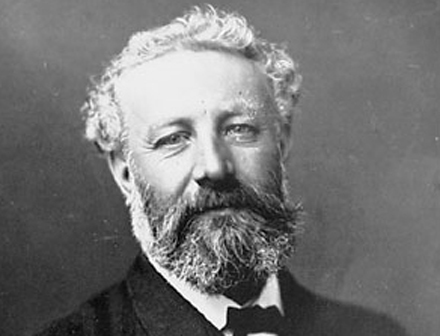
Jules Verne

Jules Verne ( 8 February 1828 – 24 March 1905)  was a French novelist and a poet, he wrote  adventure novels and the genre of science fiction.
Verne was trained as a lawyer but left his studies in the middle. He started writing over extraordinaire travels. Jules Verne wrote many books of different literary style. One of them is   Journey to the Center of the Earth, another one is Twenty Thousand Leagues under the Sea, and Around the World in EightyDays. All of this books belonged to the science fiction novel and are very famous. My favorite one is Twenty Thousand Leagues under the Sea. In this book he mentions the Spanish city of Vigo and the treasury of the Galleons of the strait of Rande 


Thursday, 12 September 2013

Around the World in Eighty Days


Author: Julio Verne


This book tells the story of Mr. Phileas Fog, an English gentleman who lived in London in 1872.  Mr. Fog was a very respectable gentleman. He belonged to a club which only accepted people of high social rank. In one of his visits to the club he made a bet of 20.000 pounds with another Englishman according to which he said he will be able to go around the world in only 80 days. This bet was made at the same time when the local newspaper was publishing news about the robbery of a bank in which some 20.000 pounds where robed.
Mr. Fog, went back home immediately to start his trip around the world as soon as possible. Upon arrival from the club, Mr Fog asked his servant, Passepartout, to prepare the luggage. His servant was a humble man recently arrived from France. Mr Fog and Passepartout started their journey passing through France, the Pyrenees, Spain, Morocco, Egypt, India, China and the United States.
In India, they met an Indian princess who was going to be burned as a ritual with the body of her dead husband and saved her from the fire. Since then, the Indian princess accompanied them for the rest of their long trip around the world.
At the same time, Mr Fog and his servant Passepartout were followed by a British policeman who believed that they were responsible for the bank robbery.
After crossing the Pacific sea, the crossed the United States, which was then the land of Indians and cowboys.
Finally, after many dangers and adventures, they cross also the Atlantic sea and they arrived in London on time wining the bet.

*   *   *

Around the World in Eighty Days


Author: Julio Verne


This book tells the story of Mr. Phileas Fog, an English gentleman who lived in London in 1872.  Mr. Fog was a very respectable gentleman. He belonged to a club which only accepted people of high social rank. In one of his visits to the club he made a bet of 20.000 pounds with another Englishman according to which he said he will be able to go around the world in only 80 days. This bet was made at the same time when the local newspaper was publishing news about the robbery of a bank in which some 20.000 pounds where robed.
Mr. Fog, went back home immediately to start his trip around the world as soon as possible. Upon arrival from the club, Mr Fog asked his servant, Passepartout, to prepare the luggage. His servant was a humble man recently arrived from France. Mr Fog and Passepartout started their journey passing through France, the Pyrenees, Spain, Morocco, Egypt, India, China and the United States.
In India, they met an Indian princess who was going to be burned as a ritual with the body of her dead husband and saved her from the fire. Since then, the Indian princess accompanied them for the rest of their long trip around the world.
At the same time, Mr Fog and his servant Passepartout were followed by a British policeman who believed that they were responsible for the bank robbery.
After crossing the Pacific sea, the crossed the United States, which was then the land of Indians and cowboys.
Finally, after many dangers and adventures, they cross also the Atlantic sea and they arrived in London on time wining the bet.


*   *   *


Wednesday, 19 June 2013


THE ARGUMENT

It is based on the play by Joseph Kesselring, written in 1939 under the title "Corpses in our warehouse." Years later took Broadway by the name of "Arsenic and OldLace" (original title: Arsenic and Old Laces). The screenplay adaptation for the screen was Julius J. Epstein. Capra actually filmed the movie in 1941, but not released until 1944, after the stage version had finished its Broadway run. At first he thought of Bob Hope for the role of Mortimer Brewster, but could not release his contract with Paramount. Capra also try with Jack Benny and Ronald Reagan before settling on Cary Grant. In theater Boris Karloff played Jonathan Brewster, who "looked like Karloff", but could not participate in the film because the recordings coincided with performances on Broadway. Raymond Massey acted in place


Arsenic and Old Lace

Mortimer Brewster (Cary Grant) is a journalist whose articles against marriage are known. At the beginning of the film, however, he married Elaine, his neighbor since they were little. You must now make a brief trip to visit his two elderly aunts and making them aware of the novelty.


In The  film the protagonist is reunited with his brother and a doctor in the house of his aunts, during the movie his brother wants to get rid of he.


Mortimer Brewster (Cary Grant) is a journalist whose articles against marriage are known. At the beginning of the film, however, he married Elaine, his neighbor since they were little. You must now make a brief trip to visit his two elderly aunts and making them aware of the novelty.


In The  film the protagonist is reunited with his brother and a doctor in the house of his aunts, during the movie his brother wants to get rid of he.